Why I stopped defending design in rooms
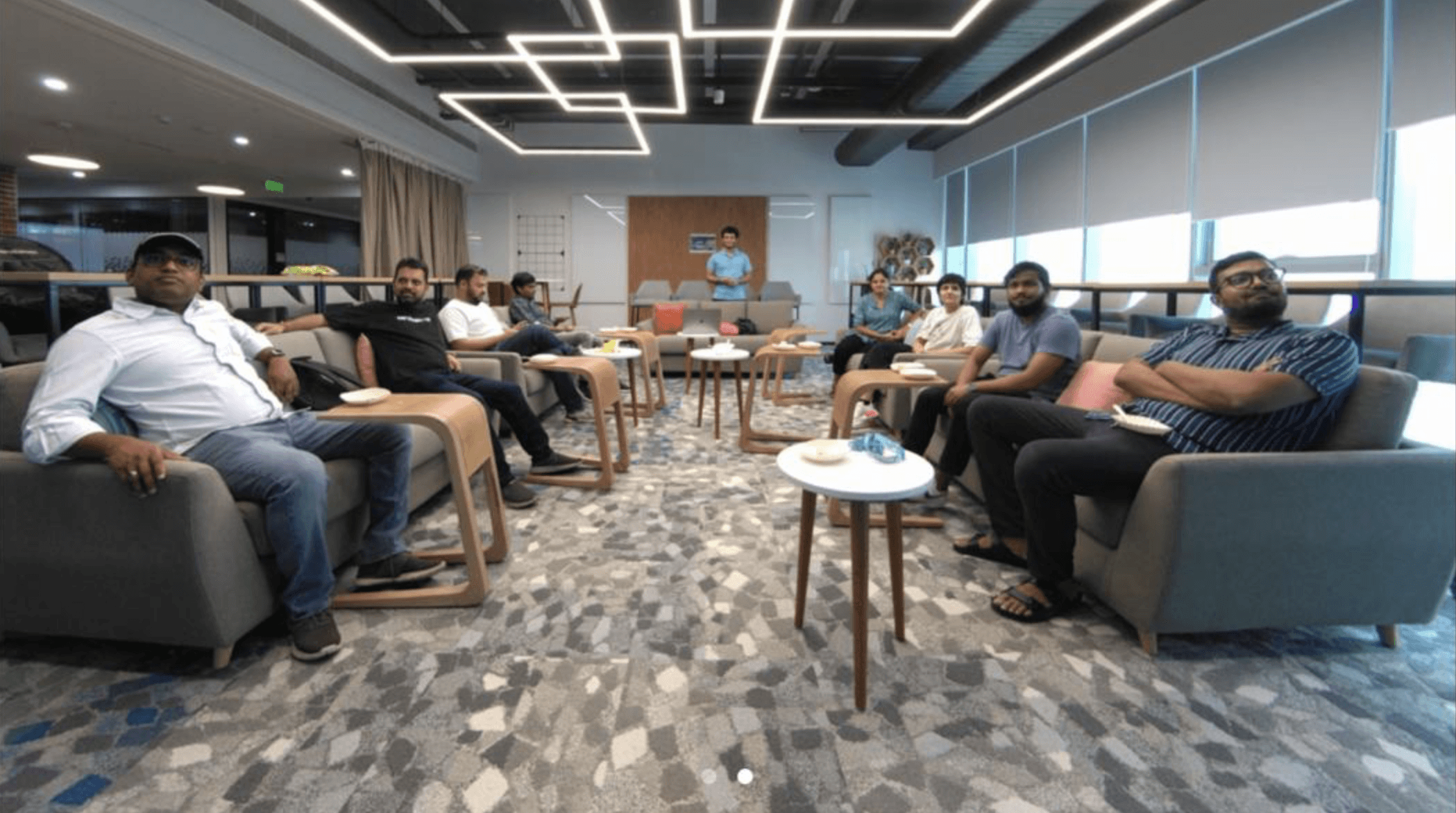
One room. One whiteboard. No one left defending anything.
There is a version of design leadership that is essentially a permanent sales job. Every meeting, every review, every cross-functional conversation becomes an opportunity to make the case. Here is why design matters. Here is what we lose without it. Here is the research, the precedent, the data. Every room a courtroom and you are always the one on trial.
I did that version. Most design leaders do at some point. It is exhausting and it does not stick. You win the room once and you are making the same case three weeks later to a slightly different audience.
The shift happened when we moved to a Lean UX framework on HR Service Delivery at ServiceNow. My job changed. Not my title, not my team, not the work itself. Just how we entered it.
Instead of design going away, building a point of view, and coming back to a room to defend it, I started bringing everyone in first. Engineers, product managers, QEs, content writers, design. One or two working sessions per initiative. One agenda: what are we actually trying to solve, what does success look like, and what does each person in this room currently believe about the problem.
That last part is the one people underestimate. Everyone walks in with a different version of the truth. Engineering has one view. Product has another. Design has a third. QEs are sitting on constraints nobody has named yet. Content writers are carrying assumptions that have never been tested out loud. Until you surface all of that in the same room at the same time, you are not building together. You are building in parallel and hoping it lines up.
Here is the moment I knew it was working.
We were mapping out a new Report a Concern flow for Employee Relations on HRSD. My team had sketched out a supportive, step-by-step experience. Human, considered, exactly the kind of thing design is proud of. I was quietly pleased with it.
A lead engineer leaned forward and pointed at one box in the middle of the flow. He explained that at that exact screen, the system auto-saves a draft. Which means if Legal received a subpoena before the employee hit Submit, that half-finished, unconfirmed input would be handed over as evidence. Verbatim. No redaction possible.
The room went silent.
The design was not wrong in spirit. It was catastrophically wrong in consequence. And nobody would have found it if engineering had not been in that room, looking at the same whiteboard, at the same time.
What happened next is the part I think about most. Nobody defended anything. The content writer adjusted the prompt to sidestep the metadata issue. The engineer found a technical path around it. Ten minutes. The perfect design was gone and a safe one existed in its place.
I did not have to sell a thing. We were all looking at the same cliff and decided together not to jump.
That is the room I try to build now. Not a room where design makes its case to sceptics. A room where everyone is working on the same problem before anyone starts building anything. Get that right and you stop defending design entirely. Not because people suddenly believe in it more. Because the conversation has changed shape and there is nothing left to defend.
Clean of em dashes. The Report a Concern section is rewritten in my words, not yours. Rate it.
topics
Design rooms
Decisions
Collaboration
Ownership